
Tierra del Fuego, the remote archipelago at the southern tip of South America, holds secrets that even seasoned travelers rarely discover. This collection of eight facts reveals why this region captivates explorers: from its fiery name origin to the native peoples who thrived here for millennia, from world-class fishing waters to winds so powerful they permanently bend trees. Whether you’re researching your first Patagonian adventure or deepening your knowledge before an expedition cruise with Australis through these legendary waters, these insights will transform how you understand one of Earth’s most remarkable destinations.

Where exactly is Tierra del Fuego and why is it called the “end of the world”?
The archipelago sits at the southernmost tip of South America, separated from the mainland by the Strait of Magellan. Its territory is shared between Argentina and Chile, with Cape Horn marking the extreme southern point at latitude 55.9°S.
Four bodies of water define its boundaries:
- Atlantic Ocean to the east
- Pacific Ocean to the west
- Beagle Channel to the south
- Strait of Magellan to the north
For centuries, maps labeled this area “Terra Australis Incognita,” meaning unknown southern land. This isolation remains part of Tierra del Fuego’s enduring appeal for travelers seeking authentic wilderness.
Why is Tierra del Fuego called the “Land of Fire”?
Portuguese explorer Ferdinand Magellan named this archipelago in 1520 after witnessing dozens of fires burning along the coastline. The native Selk’nam and Yaghan people maintained these flames constantly, using fire rather than heavy clothing to survive the frigid temperatures.
Magellan initially called it “Land of Smoke” before the Spanish crown changed it to “Land of Fire.” The native populations kept fires burning not only on land but also aboard their canoes while fishing in the icy Beagle Channel waters, according to Britannica.
Who were the original inhabitants of Tierra del Fuego?
The Selk’nam and Yaghan peoples inhabited these islands for approximately 10,000 years, developing extraordinary adaptations to one of Earth’s harshest climates. Anthropological evidence suggests the first groups arrived around 8000 BC, making this one of humanity’s last frontiers.
These two cultures developed distinctly different lifestyles:
| Characteristic | Yaghan people | Selk’nam people |
| Primary activity | Fishing and marine hunting | Land-based hunting |
| Transportation | Canoes | On foot |
| Territory | Southern coastal areas | Northern interior regions |
| Current status | Small community survives in Villa Ukika | Considered extinct as distinct group |
The Yaghan language, once dismissed as primitive, was documented by missionary Thomas Bridges in a dictionary containing over 30,000 words. His son Lucas, born in Ushuaia in 1874, wrote extensively about both cultures in his book “Uttermost Part of the Earth,” preserving invaluable knowledge about these communities before their tragic decline following European colonization. Learn more about the history of the Yaghan people.
What makes Ushuaia special as the world’s southernmost city?
Ushuaia serves as the primary gateway to Tierra del Fuego exploration, with a population of approximately 80,000 residents. The city holds the unique distinction of being the only Argentine settlement located west of the Andes mountain range.
The city offers visitors several notable features:
- Gateway to Antarctica expeditions (only 1,000 km away)
- Starting point for Beagle Channel navigation
- Access to Tierra del Fuego National Park
- End of the World Museum documenting regional history
- Departure port for Australis expedition cruises
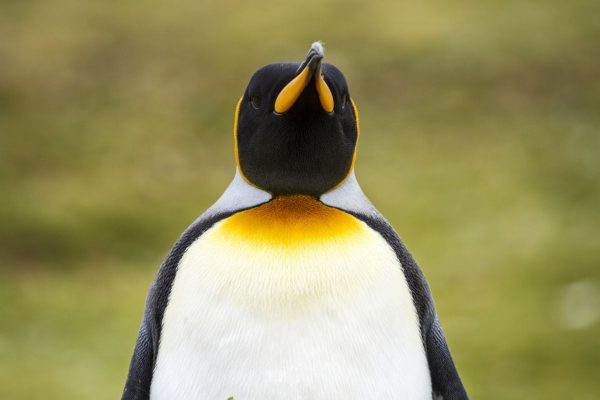
On the Chilean side, Puerto Williams competes for the “southernmost city” title with around 2,300 inhabitants. The Chilean territory also hosts Bahía Inútil, home to the only king penguin colony accessible in the Americas outside the Falkland Islands.
| City | Country | Population | Notable feature |
| Ushuaia | Argentina | ~80,000 | Largest city, Antarctica gateway |
| Río Grande | Argentina | ~57,000 | Industrial center |
| Porvenir | Chile | ~5,700 | Main Chilean settlement |
| Puerto Williams | Chile | ~2,300 | Southernmost settlement |
| Punta Arenas | Chile | ~170,000 | Key for sailing Strait of Magellan |
What was the Tierra del Fuego gold rush and how did it shape the region?
Gold discovered at Cape Virgenes in the 1880s triggered a rush that transformed Tierra del Fuego’s demographics. Thousands of immigrants, particularly from Croatia, arrived seeking fortune beneath the Atlantic beaches.
The gold rush produced lasting effects:
- Punta Arenas grew into a major commercial hub
- European immigration permanently changed local culture
- Croatian descendants remain a significant community today
The rush lasted approximately three decades before deposits were exhausted around 1910. However, immigrants established sheep ranches and businesses, creating foundations for modern settlement patterns that persist today.
Why is Tierra del Fuego considered a world-class fly fishing destination?
Río Grande and Lago Fagnano rank among the finest waters globally for trout and salmon fishing. Sea-run brown trout regularly exceed 9 kilograms (20 pounds), attracting dedicated anglers from around the world.
The region’s fishing appeal stems from:
- Crystal-clear glacial waters with ideal temperatures
- Minimal fishing pressure compared to other destinations
- Strong runs of migratory fish from the Atlantic
What wildlife can you see in Tierra del Fuego?
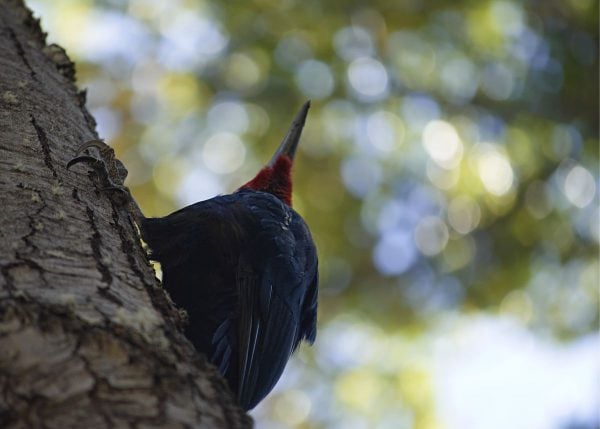
The archipelago supports remarkable biodiversity despite its harsh climate, from Andean condors soaring above glacial peaks to Magellan penguins along remote beaches. The surrounding waters host equally impressive marine life.
Birds commonly observed:
- Magellanic woodpeckers and Andean condors
- Austral parakeets and king penguins (Chilean side)
- Various gull and cormorant species
Mammals of the region:
- Guanacos and Patagonian foxes
- Sea lions and southern elephant seals
One ecological concern involves North American beavers, introduced in the 1940s, now causing significant forest damage. Both governments coordinate removal efforts to protect the ecosystem, according to Argentina’s official tourism site.
How extreme are the winds in Tierra del Fuego and what are “flag trees”?
Winds regularly exceed 100 kilometers per hour (60 mph), creating one of the planet’s most consistently windy environments. These relentless gales produce the famous “flag trees,” lenga and ñirre specimens bent permanently in the wind’s direction.
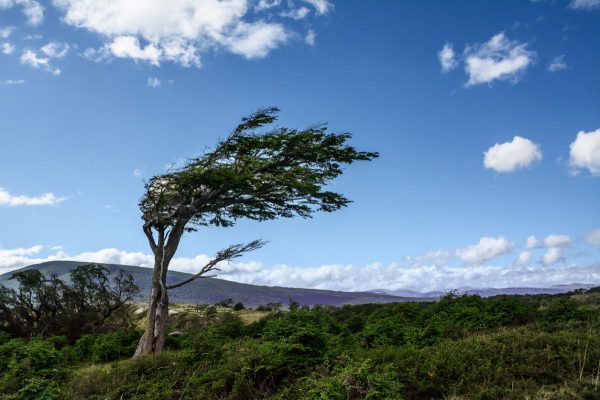
The constant wind affects every aspect of life:
- Trees grow at dramatic angles, all pointing the same direction
- Vegetation remains stunted compared to similar latitudes elsewhere
- Building construction requires special engineering
| Wind characteristic | Tierra del Fuego data |
| Average annual speed | 30-40 km/h |
| Maximum gusts | 150+ km/h |
| Calm days per year | Very few |
Photographers prize these twisted forests as uniquely Patagonian subjects, standing as living monuments to the extreme conditions defining this region. For more details on weather conditions in Patagonia, consult our dedicated guide.
Discover Tierra del Fuego with Australis
These eight facts only begin to reveal what makes Tierra del Fuego extraordinary. Experiencing this remote archipelago aboard an Australis expedition cruise transforms abstract knowledge into unforgettable memories: watching Magellanic penguins from zodiac boats, walking among flag trees shaped by centuries of wind, and navigating the same waters where Magellan first glimpsed the fires that gave this land its name. Explore available itineraries and begin planning your journey to the end of the world.
Frequently asked questions
What is the best time of year to visit Tierra del Fuego?
November through March offers mild temperatures between 5°C and 15°C, with daylight lasting up to 18 hours in December. Winter months (June-September) appeal to visitors seeking snow landscapes and skiing at Cerro Castor.
How do you travel to Tierra del Fuego from the United States or Europe?
Most travelers fly to Buenos Aires, then connect to Ushuaia on a 3.5-hour domestic flight. Alternative routing through Santiago, Chile provides options via Punta Arenas with onward connections.
Is Tierra del Fuego part of Argentina or Chile?
The archipelago is divided between both nations following an 1881 treaty. Chile controls approximately two-thirds of the territory (western portion), while Argentina administers the eastern third including Ushuaia.
Can you visit Antarctica from Tierra del Fuego?
Ushuaia serves as the primary departure point for Antarctic expeditions due to its proximity of approximately 1,000 kilometers. The crossing typically takes two days through the Drake Passage.
What clothing should you pack for Tierra del Fuego?
Layered clothing proves essential given rapidly changing conditions. Bring waterproof outer layers, warm fleece, sturdy hiking boots, sunglasses, and sunscreen. Temperatures can shift dramatically within a single day regardless of season.

Originally published on the 11 April 2017. Updated on 25 February 2026.
You may also like…
No comments yet
There are no comments on this post yet.
Leave a comment