
Planning to travel to Argentina is exciting, but it requires preparation. This guide gathers the practical essentials US travelers need before departure: visa rules, money in 2026, safety, the best time to visit, where to go, transport, cultural norms and packing. Argentina is the eighth-largest country in the world, stretching from subtropical jungle to sub-Antarctic ice, and most first-time visitors discover that some of its most striking landscapes, the Beagle Channel, the southernmost glaciers — sit beyond the reach of any road. For that final stretch into Patagonia, expedition cruises with Australis offer a comfortable, expert-led way to reach territory that land travel cannot.

Do US citizens need a visa to travel to Argentina?
US citizens do not need a tourist visa for stays of up to 90 days; a passport valid at the time of entry is sufficient.
There are no arrival forms to fill in at the airport. You will receive an entry stamp at immigration, usually for 90 days, and it is worth checking the date written on it before leaving the desk. Border officers may ask for proof of onward travel and accommodation, so keep both easily accessible.
If you wish to extend your stay beyond 90 days, you can apply for an extension at the immigration office once in the country. Full requirements are published on the US Department of State Argentina page.

How should you handle money in Argentina?
Foreign credit cards now receive a favorable exchange rate automatically when used in Argentina, making cash dollars far less essential than they were a few years ago.
This is the result of an Argentine Central Bank regulation that allows non-Argentine cards to access a rate close to the parallel market. Paying by credit card for hotels, restaurants and tours is now both safe and economically efficient.
A few practical notes:
- Carry some small-denomination pesos for taxis, tips and rural areas.
- ATM withdrawal limits are low and per-transaction fees are high.
- Tipping convention is around 10% in restaurants.
- Avoid exchanging money at the airport; in-town casas de cambio offer better rates.

When is the best time to travel to Argentina?
The best time depends entirely on the region you plan to visit. Argentina spans more than 2,300 miles north to south, and seasons behave very differently across the country.
| Region | Best months | Why |
| Patagonia & Tierra del Fuego | Late Oct – mid Apr | Mild temperatures, longer days |
| Buenos Aires | Mar – May, Oct – Nov | Comfortable weather, lighter crowds |
| Mendoza | Feb – Apr | Wine harvest season |
| Iguazú Falls | Apr – Oct | Cooler, less humid |
| Northwest (Salta, Jujuy) | Apr – Nov | Dry season |
For senior travelers, shoulder months often deliver the best balance of accessible weather, smaller crowds and easier logistics.
Which regions should first-time travelers to Argentina visit?
Most first-time visitors combine Buenos Aires with one or two natural destinations rather than trying to cover the whole country in a single trip.
| Region | Highlights | Suggested days |
| Buenos Aires | Tango, Recoleta, San Telmo, gastronomy | 3 – 4 |
| Patagonia (south) | Perito Moreno, Ushuaia, fjords | 5 – 7 |
| Iguazú Falls | UNESCO waterfalls, subtropical wildlife | 2 |
| Mendoza | Malbec wineries, Andes views | 2 – 3 |
Argentina’s scale rewards depth over breadth: trying to fit five regions into two weeks usually means more time in airports than in destinations. For a tested two-week plan, see our Argentina itinerary suggestions.
How do you get around Argentina?
Domestic flights are the most practical way to cover long distances; Argentina is simply too large for road travel between regions.
Buenos Aires is the main hub. Most internal flights depart from Aeroparque Jorge Newbery (AEP), while international arrivals use Ezeiza (EZE). Typical flight times from Buenos Aires:
- Iguazú
- Mendoza
- El Calafate
- Ushuaia
Long-distance buses are comfortable and reliable for shorter regional routes. For the deep south, expedition cruises are a uniquely efficient way to reach the Beagle Channel glaciers and Tierra del Fuego — places no road can take you.
What cultural norms should you know before arriving?
Argentine social rhythms differ from US ones, and small adjustments make daily interactions much smoother.
Restaurants typically fill after 9:30 p.m., and lunch also runs late. Time tends to be flexible: meetings, tours and social events often start later than scheduled. Greetings between adults — including new acquaintances — usually involve a single kiss on the cheek; men greet other men with a handshake.
Spanish is the official language and a few basic phrases go a long way, though English is widely spoken in tourist areas. Avoid politically sensitive topics, particularly anything related to the Malvinas/Falklands. For a fuller overview, read our guide to understanding Argentina culture.
What should you pack for a trip to Argentina?
Pack in layers — Argentina’s climate can shift from tropical to sub-Antarctic in the same trip.
| Region | Essentials |
| Buenos Aires | Smart-casual clothing, comfortable walking shoes |
| Patagonia | Windproof shell, waterproof boots, thermal layers, sun protection |
| Iguazú | Light fabrics, rain jacket, insect repellent |
| Mendoza | Layers for cool evenings, sturdy footwear for vineyards |
A few practical extras: a universal adapter (Type C/I, 220V), a refillable water bottle (tap water is safe in major cities), and any prescription medication in its original packaging with a doctor’s note.
How can you experience Patagonia once you’re in Argentina?
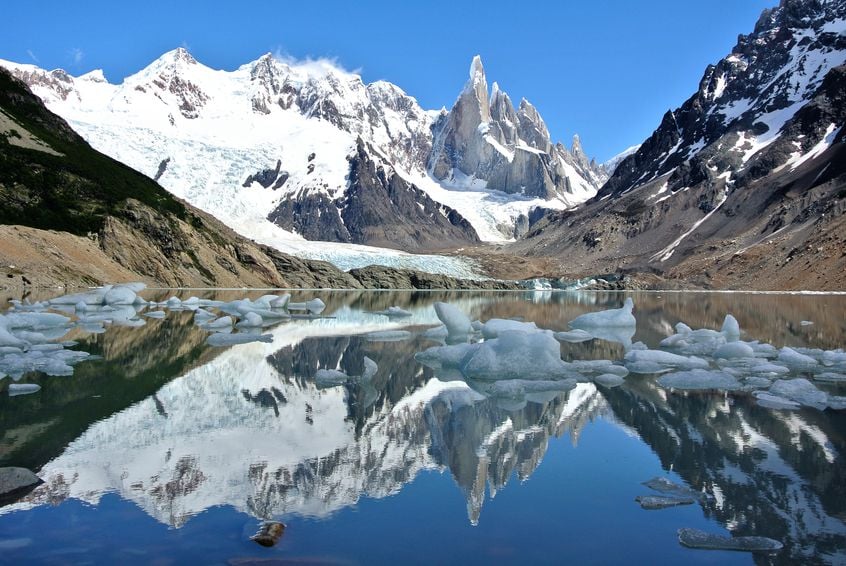
Patagonia’s most remarkable landscapes — the fjords, glaciers and channels of the deep south — are only accessible by ship. No road reaches many of the islets where Magellanic penguins nest.
Expedition cruises bridge that gap. Australis has been operating in these waters for more than thirty years, with two ships sailing between Punta Arenas in Chile and Ushuaia in Argentina.
Once in Ushuaia, the trip to Argentina opens up a whole new world: venturing into the Tierra del Fuego fjords beyond the border to cross into Chile. In this way, Ushuaia serves as a gateway to a much greater adventure. To cross the border, it is important to check with local authorities regarding access permits and required documentation.
Closing your Argentina trip with the right experience
A successful trip to Argentina rests on a few key decisions: matching the season to your destinations, prioritizing depth over breadth, and choosing the right way to access the south.
For the Patagonian leg of any Argentina itinerary, an Australis expedition cruise opens up territory that land-based travel cannot reach, in the company of expert guides who know these waters intimately. You can explore the available routes between Punta Arenas and Ushuaia and start shaping the end-of-the-world chapter of your Argentine journey.
Frequently asked questions
How many days do you need to travel to Argentina?
A meaningful first trip needs at least 10 to 14 days to combine Buenos Aires with one or two regional highlights. Three weeks allows a richer combination that includes Patagonia.
Is Argentina expensive for American travelers in 2026?
Argentina remains comparatively affordable for US visitors, though local inflation makes prices fluctuate. Foreign card payments via the MEP rate offer significantly better value than cash exchange.
Can you drink tap water in Argentina?
Tap water is generally safe in Buenos Aires, Mendoza, Bariloche, Ushuaia and most major cities. In remote northern regions, bottled water is recommended.
Do you need travel insurance for Argentina?
Travel insurance with medical evacuation coverage is strongly advised, particularly for trips that include hiking, remote regions or expedition cruising.
Is English widely spoken in Argentina?
English is commonly spoken in hotels, restaurants and tour operations in Buenos Aires and major tourist destinations. In smaller towns, basic Spanish phrases are very useful.
Originally published on November 1, 2016 • Updated on June 17, 2026


You may also like…

No comments yet
There are no comments on this post yet.
Leave a comment