
Few destinations have inspired as rich a literary tradition as Patagonia. From 16th-century navigators to 20th-century exiles, writers across nationalities and centuries have tried to make sense of this vast, wind-scoured landscape at the end of the world. This guide presents eight essential books about Patagonia (travel classics, scientific journals, memoirs, and historical novels) chosen for the reader who wants to arrive with context and leave with more questions than answers. Many of the places described in these pages — the Strait of Magellan, the Beagle Channel, Wulaia Bay, Cape Horn — are the same landscapes that Australis expedition cruises navigate today, making each book a companion as much as a preparation.

Why do great writers keep returning to Patagonia?
Patagonia pulls writers in for the same reasons it pulls travelers: it is one of the few places left where the scale of the landscape still exceeds the scale of human ambition. The region offers:
- Extreme and photogenic nature: glaciers, fjords, channels, and steppe in close proximity
- A layered human history spanning indigenous cultures, Age of Exploration, colonial settlement, and political exile
- A geographic remoteness that strips away distraction and forces a kind of clarity
- Stories that feel larger than life: kings proclaimed in the wilderness, circumnavigations launched against all reason, peoples who lived at the edge of the known world for thousands of years
Bruce Chatwin captured it precisely: Patagonia is “the farthest place to which man walked from his place of origins.” That distance, physical and metaphorical, is what gives its literature such unusual weight.
What is the most famous book about Patagonia?
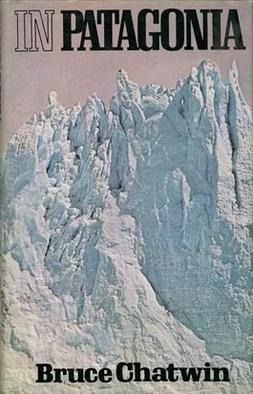
In Patagonia by Bruce Chatwin (Sheffield, England, 1940–1989) is the book that defined Patagonia for the modern reader. Nearly 50 years after publication, it remains the starting point for any serious reading list about the region.
The book is structured as 93 short, loosely connected vignettes. Each one a snapshot of a person, a place, or a story encountered during a months-long journey through Chilean and Argentine Patagonia. What readers will find inside:
- The Cueva del Milodón near Torres del Paine, where a piece of giant sloth skin ignited Chatwin’s childhood obsession with the region
- The Patagonian years of Butch Cassidy and the Sundance Kid, who owned a ranch near Cholila
- Welsh immigrants farming the steppe and maintaining their language generations after settling
- Descendants of shipwrecked sailors, failed utopian colonies, and drifters from across the world
The writing style is precise, compressed, and literary, closer to fiction than to a conventional travel guide. It captures Patagonia as a place where the world’s restless and displaced have always washed up, a theme that resonates long after the last page.
Which book best captures the landscapes and waters of the far south?
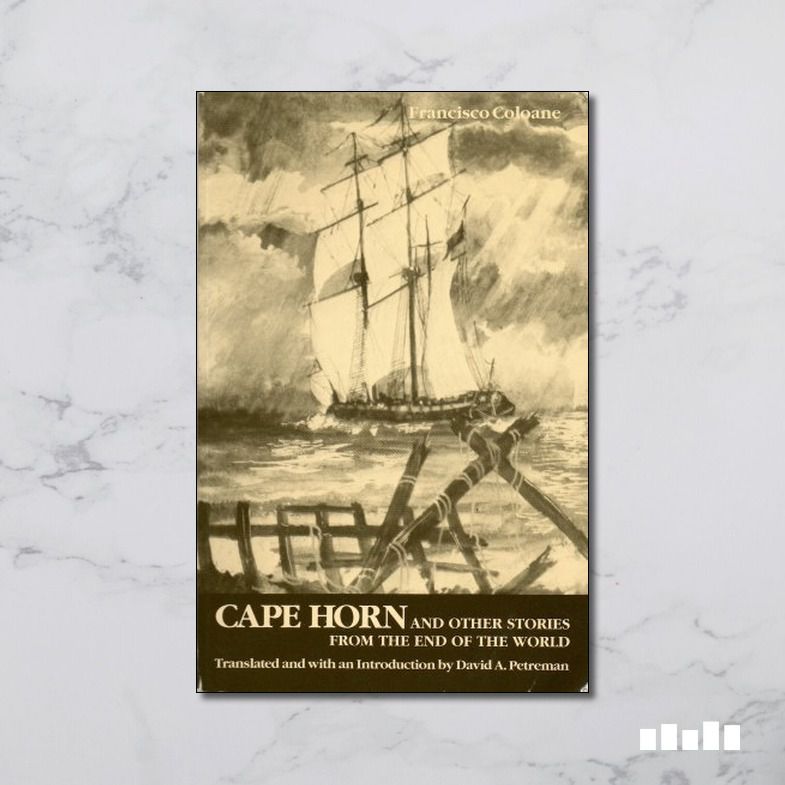
Cape Horn and Other Stories from the End of the World by Francisco Coloane (Quemchi, Chiloé, Chile, 1910–2002) brings Patagonia’s waterways, storms, and coastlines to life with a raw authenticity that no traveler’s account can match.
Francisco Coloane is one of the most celebrated writers in Chilean literary history. Born on the island of Chiloé, he spent his early years working as a sailor, sheep herder, and gold prospector in Patagonia and Tierra del Fuego — experiences that gave his fiction an authenticity no library could provide. Known internationally as “the Jack London of South America”, he won the Premio Nacional de Literatura (1964), Chile’s highest literary honor, and his books have been translated into more than six languages. For Chilean culture, Coloane represents something rare: a writer who turned the remote landscapes of the deep south into universal literature.
The collection contains 16 short stories set in the Strait of Magellan, Tierra del Fuego, Cape Horn, and the Beagle Channel — the exact waters that Australis passengers sail. What readers will find inside:
- Lighthouse keepers stranded by winter storms, slowly turning on each other as provisions run low
- Seal hunters navigating treacherous channels in deteriorating vessels
- Gold prospectors driven to betrayal by isolation
- Shepherds and sailors surviving blizzards on the Patagonian steppe
The Patagonian environment is the true protagonist of every story. Each tale turns on the confrontation between human will and the violence of nature. Critics have compared Coloane’s tone to Jack London and Joseph Conrad: spare, stoical, and deeply respectful of the sea. Each story is short enough to read between landings, and each one is set somewhere the traveler may recognize from the view outside the window.
Which book tells the human history of Tierra del Fuego from the inside?
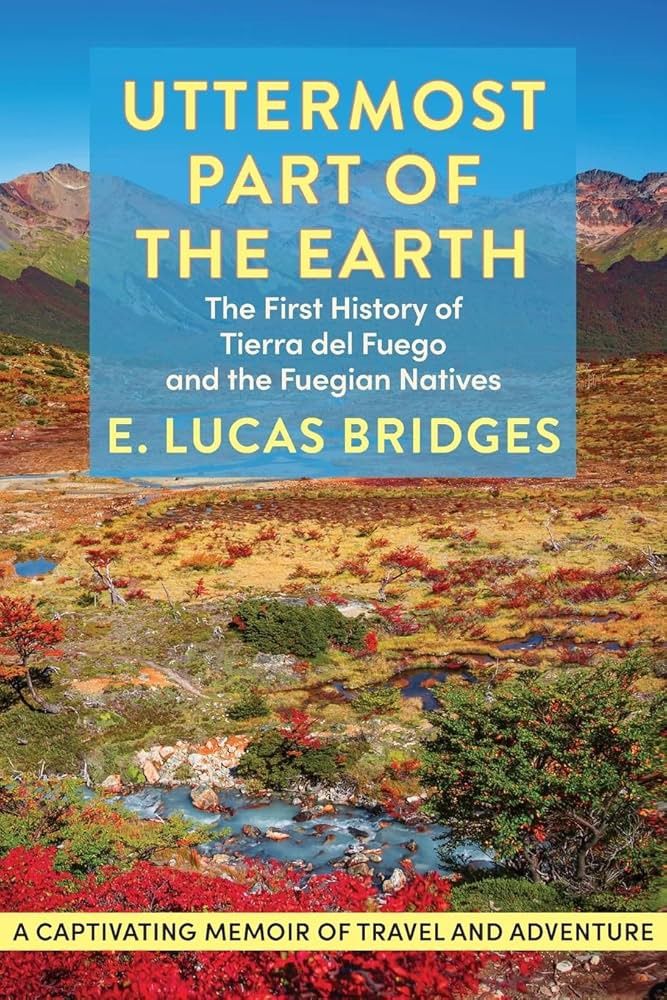
The Uttermost Part of the Earth by Lucas Bridges (Tierra del Fuego, 1874–1949) is the only book written by someone who grew up among the indigenous peoples of Tierra del Fuego — making it an irreplaceable account of a world that no longer exists.
Bridges was born in Tierra del Fuego in 1874, the son of British missionaries, and grew up speaking Yagán and Selk’nam alongside English. His memoir covers:
- The daily life, ceremonies, and oral traditions of the Yagán people, documented by someone who spoke their language fluently
- The discovery of gold in Tierra del Fuego and the violent disruption it brought to indigenous communities
- Pioneer life on the estancias and early encounters with explorers and missionaries
- The devastating collapse of indigenous populations under the pressure of colonization — witnessed firsthand
The tone is personal, respectful, and at times deeply sorrowful. For Australis passengers, the book has a direct physical connection: Wulaia Bay, one of the main stops on the cruise, was one of the largest Yagán settlements. The Australis-sponsored information center there focuses on exactly the history Bridges describes.
Which books connect Patagonia to the history of exploration?
Two books answer this question from very different angles — one reconstructs the 16th-century voyage that gave the region its most famous waterway; the other follows the scientific expedition that changed humanity’s understanding of life on Earth.
Magellan by Stefan Zweig (1938)
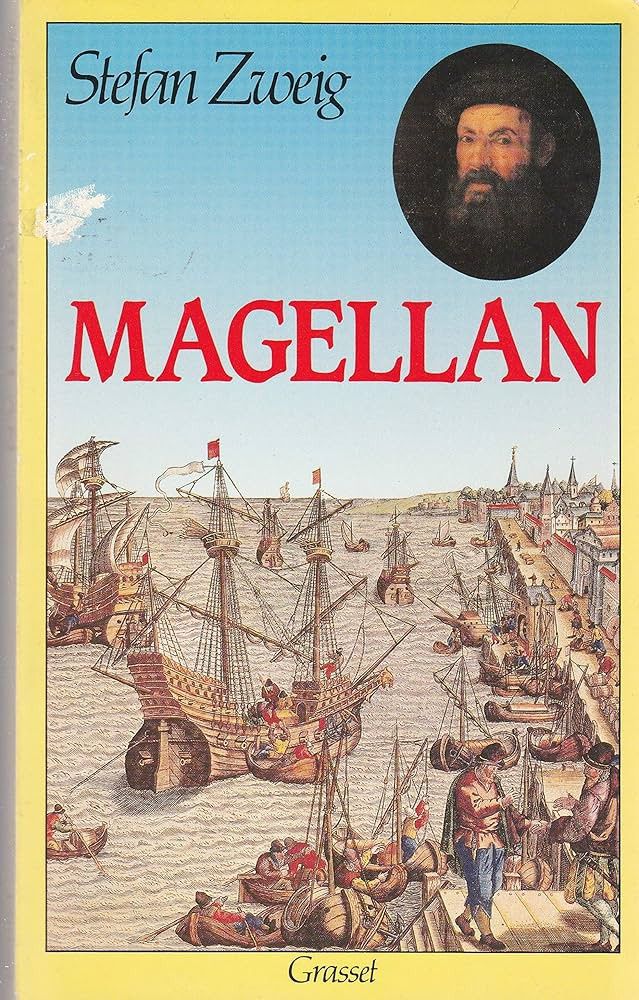
This biography of Ferdinand Magellan reads like an adventure novel. What readers will find inside:
- The political maneuvering required to secure funding for the voyage from the Spanish crown
- The mutinies Magellan suppressed at sea with ruthless precision
- The terror and wonder of entering the strait for the first time — waters so treacherous that only one of the original five ships returned
- A psychological portrait of a man driven by an idea against all practical odds
The Strait of Magellan is the departure point of every Australis cruise. Reading Magellan before boarding makes the first morning at sea feel like a continuation of history.
The Voyage of the Beagle by Charles Darwin (1839)
The Voyage of the Beagle is Darwin’s own journal of the five-year voyage of HMS Beagle covers his time in Patagonia and Tierra del Fuego between 1832 and 1836. What readers will find inside:
- His first impressions of the Beagle Channel and Wulaia Bay, both central stops on Australis itineraries
- Detailed observations of Fuegian indigenous peoples, including Jemmy Button
- Fossil discoveries on the Patagonian steppe that began to unsettle his assumptions about creation
- Descriptions of glaciers, forests, and weather that remain recognizable nearly two centuries later
A common misconception worth correcting: most people associate Darwin with the Galápagos, but his time in Patagonia was arguably more formative for his thinking on evolution. The book is free in the public domain — the most accessible on this list.
Which book offers the most personal journey through Patagonia?
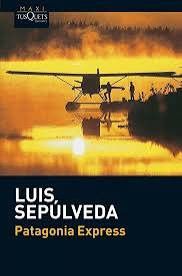
Patagonia Express by Luis Sepúlveda (Ovalle, Chile, 1949–2020) is the most intimate book on this list — a return to a beloved landscape after years of political exile, told through encounters with extraordinary people and places.
What readers will find inside:
- Ladislao Eznaola, a sea wanderer searching for a ghost ship along the southern channels
- Radio Ventisquero and its lone broadcaster keeping remote Patagonian communities connected
- Pilots who fly wine and corpses alike over the desolate steppe
- The bards, drifters, and eccentrics who populate the far south
The tone is warmer and more melancholic than Chatwin — less interested in landscape as myth, more interested in the human beings who inhabit it. The book opens and closes with personal encounters with Chatwin and Coloane, weaving the entire Patagonian literary tradition into a single, personal journey. Note: Patagonia Express has limited availability in English and is primarily accessible in Spanish, Italian, and French.
Is there an American travel classic about Patagonia?
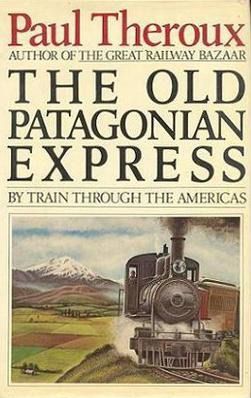
The Old Patagonian Express by Paul Theroux (Medford, Massachusetts, USA, 1941) is the closest thing to an American classic about the region. Theroux travels by train from his home in Boston all the way to Patagonian Argentina, a journey of two months through every climate and culture between North America and the far south.
What readers will find inside:
- The slow, disorienting transition from North American comfort to the rawness of the southern continent
- A memorable encounter with the blind Argentine writer Jorge Luis Borges in Buenos Aires, who asks Theroux to read the English classics aloud to him
- The arrival at last in the windswept steppe via a tiny, rattling steam train — the “Old Patagonian Express” of the title
- Borges’ wry remark — “Patagonia is dreary” — and Theroux’s meditation on the gap between myth and reality
The book is more about the journey to Patagonia than about Patagonia itself, which is part of its value: it shows how far south you have to travel, and how much changes along the way.
Quick reference: books about Patagonia at a glance
| Book | Type | In English | Best read |
| In Patagonia — Chatwin (1977) | Travel literature | ✅ Yes | Before the trip |
| Cape Horn and Other Stories — Coloane (1941) | Short stories | ✅ Partial | During the cruise |
| The Uttermost Part of the Earth — Bridges (1948) | Memoir | ✅ Yes | Before the trip |
| Magellan — Zweig (1938) | Biography | ✅ Yes | Before the trip |
| The Voyage of the Beagle — Darwin (1839) | Scientific journal | ✅ Free | Before the trip |
| Patagonia Express — Sepúlveda (1995) | Travel/Memoir | ⚠️ Limited | After the trip |
| The Old Patagonian Express — Theroux (1979) | Travel | ✅ Yes | Before the trip |
Conclusion
The books on this list were written across five centuries, in five languages, by scientists, exiles, novelists, and explorers. What they share is a conviction that Patagonia rewards attention — that the more carefully you look, the more the landscape gives back. Reading any one of them before an expedition cruise through the Strait of Magellan, the Beagle Channel, or Cape Horn does not replace the experience of being there. It layers it. If you are planning an expedition cruise to Patagonia and want to experience these landscapes firsthand, Australis offers itineraries through the Strait of Magellan, the Beagle Channel, and Cape Horn — the same waters described in the pages above. Explore routes and departures of Australis’ cruises and experience the adventures described in these books..
Frequently asked questions about books about Patagonia
What book should I read before a Patagonia cruise?
In Patagonia by Chatwin is the universal starting point. For a cruise specifically, Magellan by Zweig and The Voyage of the Beagle by Darwin connect most directly to the landscapes and waterways you will sail through.
Is In Patagonia fiction or non-fiction?
It is based on a real journey Chatwin made in 1974–75, but he acknowledged rearranging events and taking artistic liberties. It is best understood as literary non-fiction — a blend of fact, personal observation, and imagination.
Which of these books is easiest to read on a trip?
Coloane’s Cape Horn and Other Stories works best during a cruise: the stories are short, self-contained, and set in the same waters you are sailing through.
Are there recent books about Patagonia published after 2010?
Yes. Small Earthquakes by Shafik Meghji (2025) has been praised for weaving Britain’s lesser-known history in Patagonia into a narrative that runs from Buenos Aires to Tierra del Fuego. It is a strong addition to any reading list.


You may also like…


No comments yet
There are no comments on this post yet.
Leave a comment