
Patagonia’s national parks protect some of the most dramatic landscapes on Earth, from towering glaciers and pristine fjords to windswept steppes and subantarctic forests. This article covers six essential parks that combine well with expedition cruising: three accessible exclusively or primarily by water (Cabo de Hornos, Alberto de Agostini, and Tierra del Fuego) and three that pair perfectly as land-based extensions (Torres del Paine, Los Glaciares, and Bernardo O’Higgins). For travelers seeking comfort without sacrificing adventure, expedition cruises like those offered by Australis provide access to remote areas while handling all logistics, meals, and expert-guided excursions.
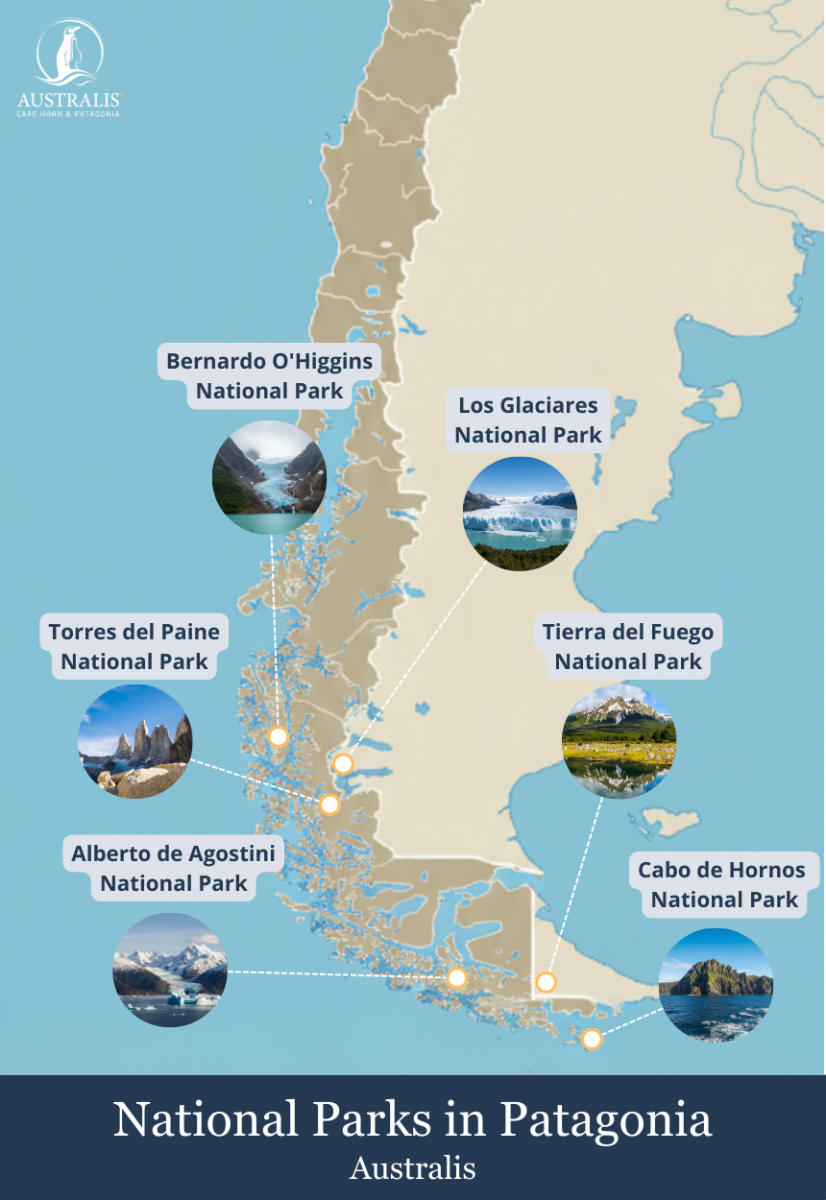
Why is Patagonia a world-class destination for national parks?
Patagonia contains some of the planet’s most pristine ecosystems, from ancient glaciers and temperate rainforests to dramatic fjords and windswept steppes. The region’s national parks protect over 28 million acres of wilderness, much of it inaccessible by road.
This vast territory at the southern tip of South America is shared by Chile and Argentina, with the Andes mountains forming a natural border. The landscapes here are remarkably diverse:
- Glaciers calving into turquoise lakes
- Deep fjords carved by ancient ice
- Granite peaks rising dramatically from the steppe
- Dense forests of lenga and coigüe trees
- Coastal areas teeming with marine wildlife
The wildlife is equally impressive, including Magellanic penguins, elephant seals, Andean condors, guanacos, and several whale species. Many of these animals can be observed during cruise landings at sites impossible to reach overland.
The best time to visit is during the Southern Hemisphere’s warmer months, from late september to April, when temperatures are milder and daylight extends well into the evening.
Which national parks can you explore by expedition cruise?
Several of Patagonia’s most remote and spectacular parks are best accessed—or only accessible—by water. Expedition cruises navigate the fjords and channels connecting these protected areas, offering landings and excursions impossible to reach by land.
Cabo de Hornos (Cape Horn) National Park
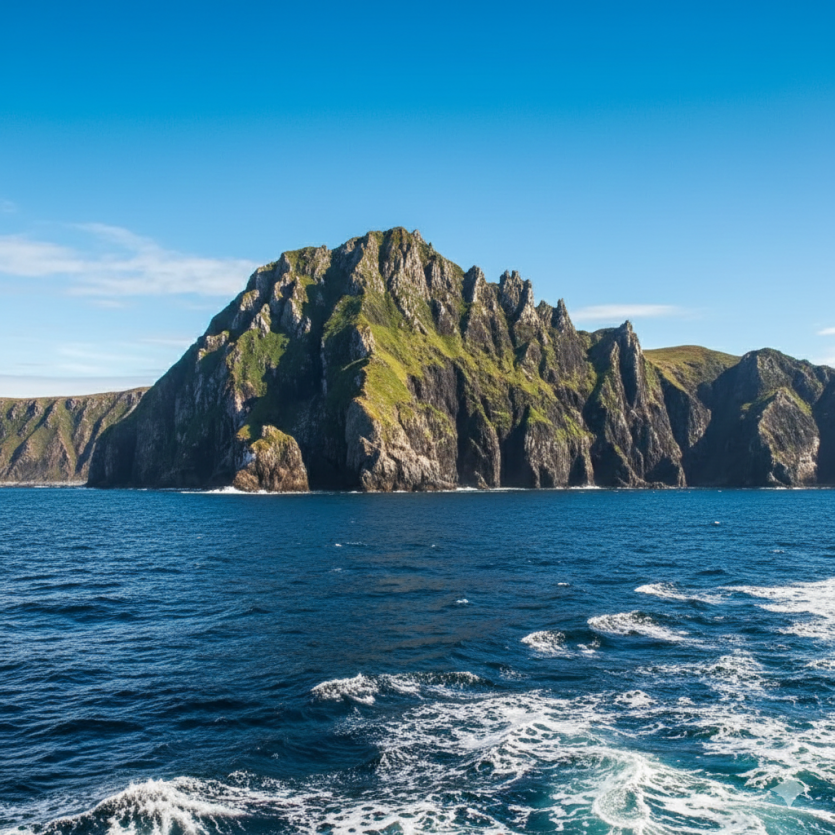
Cape Horn National Park protects the southernmost lands before Antarctica, including the legendary Cape Horn itself. This UNESCO Biosphere Reserve can only be visited by sea, making it an exclusive highlight of Patagonian expedition cruises.
The park encompasses a cluster of islands at the very tip of South America, where the Atlantic and Pacific oceans meet. Key features include:
- The iconic Cape Horn monument featuring an albatross sculpture
- A small chapel and lighthouse maintained by the Chilean Navy
- Breeding colonies of seabirds including the wandering albatross
- Dramatic cliffs battered by some of the world’s fiercest winds
Weather conditions determine whether landings are possible, which adds to the emotional significance when passengers successfully step onto this legendary ground. For centuries, Cape Horn represented the most dangerous passage in global maritime trade, and standing there today connects visitors to that powerful history.
Alberto de Agostini National Park
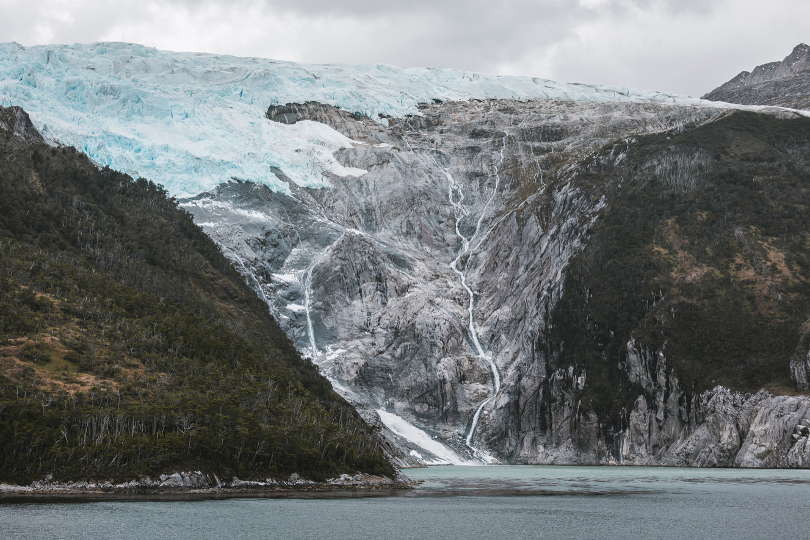
Named after an Italian missionary and explorer who documented the region in the early 1900s, Alberto de Agostini National Park encompasses over 3.5 million acres of glaciers, fjords, and pristine wilderness. It remains accessible only by boat.
The park lies within Chilean Tierra del Fuego along the Beagle Channel and Darwin Range. Highlights include:
- Marinelli Glacier, one of the largest in the Darwin Cordillera
- Garibaldi Glacier, with its distinctive blue ice
- Pristine fjords with no human settlements or infrastructure
- Zodiac excursions offering close approaches to glacier faces
Wildlife encounters are frequent, with sea lions, Magellanic penguins, and imperial cormorants visible from the water and during shore landings. The park’s complete isolation means visitors experience landscapes essentially unchanged since the last ice age.
Tierra del Fuego National Park
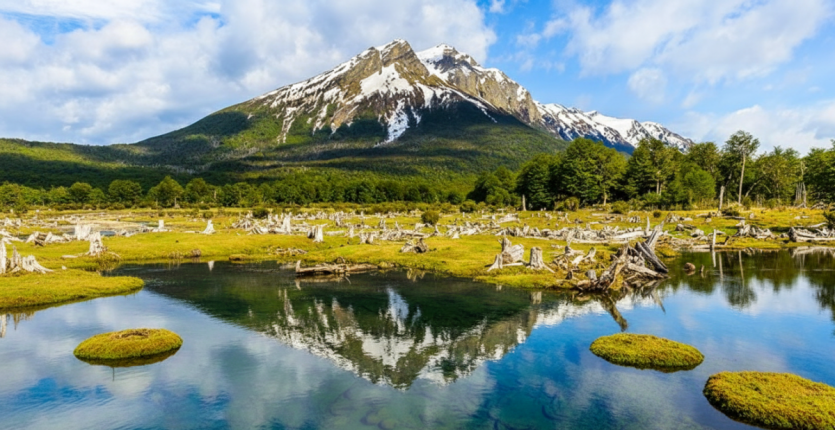
Argentina’s southernmost national park lies just minutes from Ushuaia, the common embarkation and disembarkation point for Patagonian cruises. Its subantarctic forests and coastal scenery make it an ideal complement to any expedition voyage.
The park offers accessible experiences suitable for all fitness levels:
- Lapataia Bay, marking the official end of the Pan-American Highway
- Well-maintained trails through lenga and ñire forests
- Coastal walks along the Beagle Channel
- Scenic viewpoints over lakes and peat bogs
This park works perfectly as a half-day excursion before boarding or after disembarking from a cruise. The landscapes provide an excellent introduction to the subantarctic ecosystems that expedition passengers will encounter throughout their voyage.
What parks can you combine with a Patagonian cruise itinerary?
Several iconic parks lie within easy reach of cruise embarkation points, allowing travelers to extend their journey with world-famous destinations accessible by land before or after their voyage.
Torres del Paine National Park
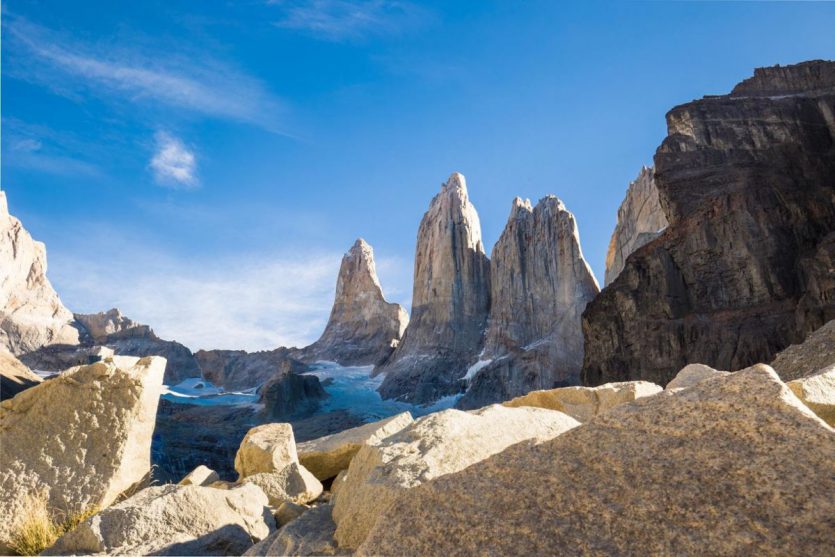
Chile’s crown jewel of national parks offers some of the most dramatic mountain scenery on Earth. Located a few hours from Punta Arenas, it pairs naturally with cruises departing from that port city.
The park’s UNESCO Biosphere Reserve status reflects its ecological importance. Visitors can experience:
- The iconic granite towers (Torres) that give the park its name
- Grey Glacier and its floating icebergs
- Lake Pehoé with its stunning mountain reflections
- Guanaco herds grazing across the steppe
Full-day tours from Puerto Natales or Punta Arenas allow visitors to see major highlights without undertaking multi-day treks. The park also offers the best wild puma sighting opportunities in the world, with specialized guides leading observation excursions.
Los Glaciares National Park
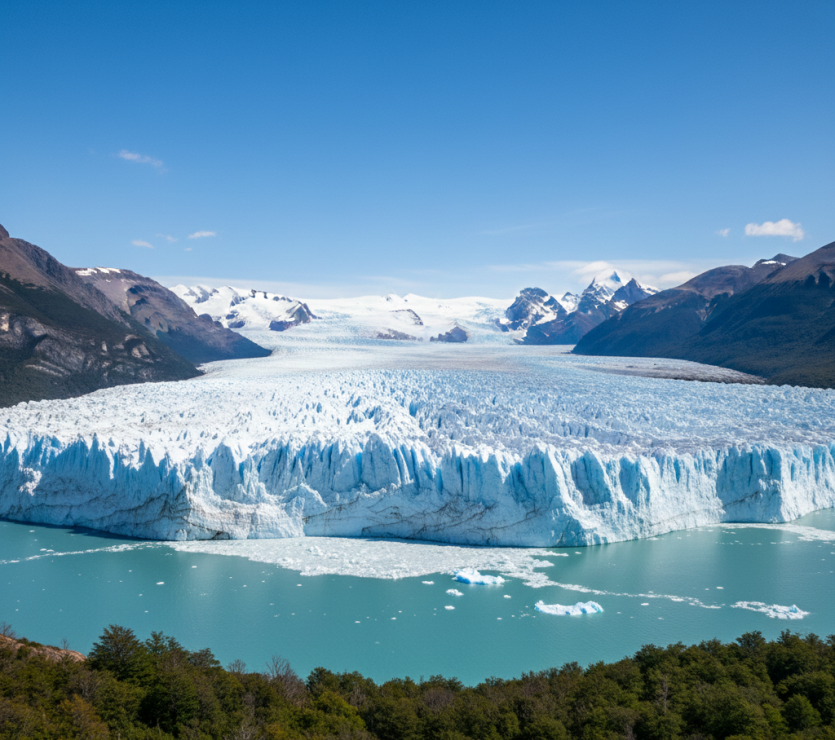
Home to the world-famous Perito Moreno Glacier, Los Glaciares in Argentina is a UNESCO World Heritage Site offering one of nature’s most accessible glacier experiences. The park connects easily with cruises departing from Ushuaia.
Perito Moreno is one of the few glaciers in the world that continues advancing rather than retreating. Viewing options include:
- Extensive boardwalk systems with multiple glacier viewpoints
- Boat excursions approaching the 200-foot ice wall
- Optional ice trekking on the glacier surface
- Scenic navigation through iceberg-filled waters
The nearby town of El Calafate offers comfortable accommodations and direct flights to Ushuaia, making it straightforward to combine both destinations in a single itinerary.
Bernardo O’Higgins National Park
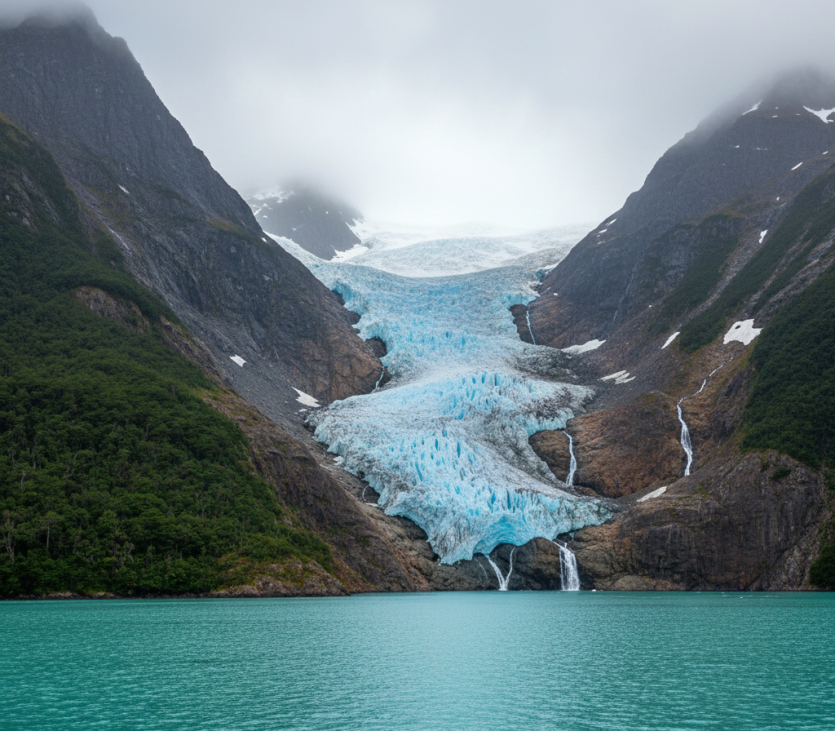
Chile’s largest national park spans nearly 9 million acres of glaciers, fjords, and ice fields. While largely inaccessible, boat excursions from Puerto Natales reach the Serrano and Balmaceda glaciers.
This park offers an off-the-beaten-path alternative for travelers seeking fewer crowds:
- Navigation through pristine fjord systems
- Views of glaciers descending from the Southern Patagonian Ice Field
- Potential sightings of the endangered huemul deer
- Dense vegetation and waterfalls along the shoreline
National parks comparison
| Park | Country | Access | Best for | Difficulty |
| Cabo de Hornos | Chile | Cruise only | History, seabirds, dramatic scenery | Easy (weather dependent) |
| Alberto de Agostini | Chile | Cruise only | Glaciers, wildlife, pristine fjords | Easy to moderate |
| Tierra del Fuego | Argentina | Land (near Ushuaia) | Forests, coastal walks, pre/post cruise | Easy |
| Torres del Paine | Chile | Land (from Punta Arenas) | Mountain scenery, wildlife, photography | Easy to challenging |
| Los Glaciares | Argentina | Land (from El Calafate) | Glacier viewing, ice experiences | Easy to moderate |
| Bernardo O’Higgins | Chile | Boat from Puerto Natales | Remote glaciers, solitude | Easy |
How should you plan a national parks itinerary in Patagonia?
The most rewarding Patagonian itineraries combine expedition cruising through the fjords with strategic land-based extensions. This approach maximizes scenery while minimizing logistical complexity.
A well-structured itinerary might follow this sequence:
- Days 1-3: fly into Punta Arenas, explore Torres del Paine
- Days 4-7: board expedition cruise, navigate fjords and channels
- Days 8: disembark in Ushuaia, visit Tierra del Fuego
- Days 9-10: fly to El Calafate, visit Perito Moreno Glacier
- Day 11: return flights home
This routing allows travelers to experience both cruise-accessible and land-based parks without backtracking. The reverse direction works equally well, starting in El Calafate and ending in Punta Arenas.
Plan for 10-14 days to experience both cruise and land components comfortably. October through March offers the best weather conditions, with December and January providing the longest daylight hours for wildlife observation and photography.
Discover Patagonia’s parks with Australis
Patagonia’s national parks represent some of the last true wilderness areas on the planet, and the combination of cruise and land exploration offers the most complete experience of this remarkable region. Australis expedition cruises navigate the channels and fjords connecting these protected areas, with expert naturalist guides, comfortable accommodations, and Zodiac excursions to sites inaccessible by any other means. Explore available itineraries in Australis to begin planning your Patagonian adventure.
Frequently asked questions
Do I need to be physically fit to visit Patagonia’s national parks?
Many parks offer accessible viewing platforms and easy walks suitable for all fitness levels. Expedition cruises provide Zodiac landings with assistance from experienced crew members. It is important to note that the excursions have different levels of difficulty, but all require adequate mobility to board and disembark from the zodiacs.
Can I see penguins in Patagonia’s national parks?
Yes. Magellanic penguin colonies can be visited at Isla Magdalena near Punta Arenas and during cruise landings at Tucker Islets. The breeding season runs from October through March.
How remote are Patagonia’s national parks?
Very remote. Many areas have no roads, cell service, or facilities—which is precisely why expedition cruising offers the most practical and comfortable access to these pristine landscapes.
Is Patagonia safe for senior travelers?
Extremely safe. Chile and Argentina have excellent tourism infrastructure, and organized expedition cruises handle all logistics, meals, and excursions with professional support throughout.


You may also like…
No comments yet
There are no comments on this post yet.
Leave a comment