
Chile’s wine map stretches across radically different climates — from the cool, fog-laced coast of Casablanca to the sun-drenched hillsides of Colchagua and the fertile breadth of the Maule Valley. Each geography shapes its grapes in a distinct way, and that diversity is exactly what Australis expedition cruises bring to the table as you sail through Patagonia. Aboard the Stella Australis and Ventus Australis, a curated selection of mainly Chilean wines, complemented by a few Argentine labels, accompanies every meal and every mile of fjord, glacier and open channel — a way of tasting Chile’s most celebrated valleys while the landscapes of the south unfold through panoramic windows. This article explores how Chilean wine geography connects to the onboard experience, which grape varieties define the region, practical pairing tips for Patagonian cuisine and why the world’s southernmost vineyards in Argentine Patagonia make this corner of the planet a destination for wine lovers.

What kind of wines can you enjoy aboard an Australis expedition cruise?
Throughout the voyage, wine lovers can explore Chile’s most established wine valleys without leaving the ship. The onboard cellar is built around regions with decades of viticultural tradition and international recognition — each valley contributing a distinct character to the table.
The white wine selection typically features crisp, cool-climate Sauvignon Blanc from Casablanca Valley — one of Chile’s most acclaimed coastal appellations — alongside elegant Chardonnay from Casablanca, Colchagua and the Maule Valley, where longer growing seasons produce wines of great balance and subtle complexity.
For red wine enthusiasts, the selection highlights Carmenère from Cachapoal and Colchagua — Chile’s signature grape at its best — along with structured red blends from Colchagua, refined Pinot Noir from Casablanca, classic Cabernet Sauvignon, and Malbec from Mendoza that adds an Argentine accent to the table.
The Australis open bar includes wines, spirits and cocktails from 10 AM to midnight. The specific labels and vintages may vary by season and sailing, as the onboard selection is refreshed periodically to reflect the best available wines from each harvest.
Why is Carmenère Chile’s signature grape?
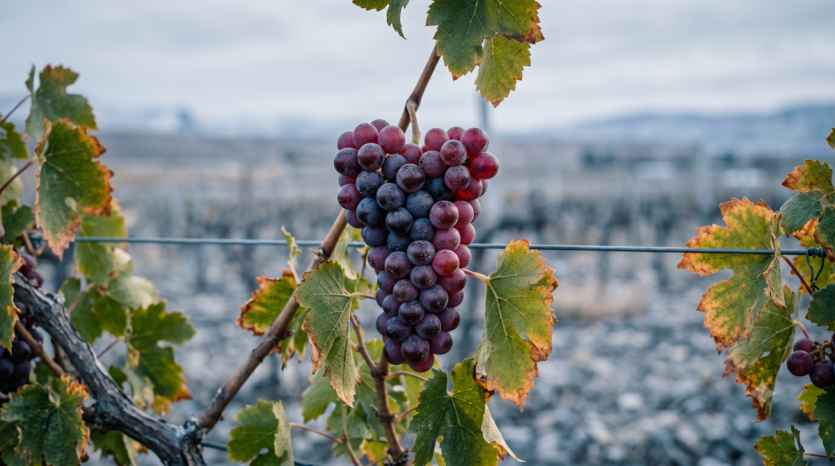
Carmenère is a Bordeaux grape thought extinct after the 19th-century phylloxera plague until French ampelographer Jean-Michel Boursiquot rediscovered it in Chilean vineyards in 1994 — it had been misidentified as Merlot for nearly 150 years. Today Chile is essentially the only major producer worldwide.
Its flavor profile is approachable and food-friendly: dark cherry, plum, roasted red bell pepper, black pepper and smooth, velvety tannins. Aboard Australis, Carmenère pairs naturally with rich, smoky Magellanic dishes.
An interesting cultural detail: some Chilean Carmenère wines carry Patagonian-inspired names on their labels, even though the grapes grow in warmer Central Valley regions like Cachapoal. The name evokes the spirit of the south — a tribute to Chile’s frontier identity rather than a geographic origin. For a deeper dive, visit the Australis blog’s guide to Chilean red wines.
How do the onboard wines pair with Patagonian cuisine?
The Australis kitchen works with regional ingredients — king crab, Magellanic hake, Patagonian lamb, smoked salmon — and the wine selection complements those flavors. A few simple principles make every meal more memorable.
Seafood pairings:
- King crab → Casablanca Sauvignon Blanc: acidity cuts through the sweet, rich crab meat
- Magellanic hake or grouper → Casablanca Chardonnay: creamy texture mirrors the firm white fish
- Ceviches and smoked salmon → Colchagua Sauvignon Blanc: citrus notes refresh the palate
Meat pairings:
- Patagonian lamb → Casablanca Pinot Noir: delicate tannins respect the lean meat
- Pork ribs → Cachapoal Carmenère: spice and structure match the smoke
- Hearty red-meat dishes → Colchagua red blend, Cabernet Sauvignon or Mendoza Malbec: ripe fruit and firm tannins stand up to richer preparations
For more on Patagonian dishes, the Australis blog offers a dedicated culinary guide.
What makes wine aboard Australis a different experience?
The onboard bar, open from 10 AM to midnight and surrounded by panoramic windows, turns every glass into a front-row seat to the Patagonian landscape. As the ship advances through channels, fjords and open ocean, the scenery shifts constantly — glaciers give way to dense Magellanic forest, then to the vast southern horizon — and each moment invites a different wine.
A crisp Casablanca Sauvignon Blanc feels right alongside the cool blues of a glacier. A Colchagua Carmenère with its warm spice gains depth as evening light turns the channels amber. That connection between what you taste and what you see is not something the ship engineers — it simply happens when good wine, regional cuisine and raw nature share the same space, with no Wi-Fi to distract from the moment.
The voyage also has its rituals. On boarding day — in Ushuaia or Punta Arenas at 6 PM — the captain and crew are introduced over a communal welcome toast. Throughout the expedition, onboard lectures about glaciology, indigenous peoples and southern geography create the cultural frame that makes each sip more meaningful. And the farewell evening in the Darwin Lounge — champagne, a photo slideshow, quiet reflection — closes the circle. Wine aboard Australis is never about labels or scores; it is about place, people and the particular light of the southern oceans.
What makes Patagonia a unique wine region?
Beyond the Chilean valleys served onboard, a new and increasingly respected chapter in South American wine is being written further south. Argentine Patagonia — spanning Río Negro, Neuquén and Chubut — has emerged as a frontier wine region where extreme climate conditions produce grapes with a character found nowhere else on the continent. While Chilean Patagonia remains largely experimental in viticultural terms, the Argentine side has built real momentum over the past two decades.
The region’s modern history begins in 1909, when engineer Humberto Canale founded the first commercial winery in Río Negro’s Alto Valle. For decades, Patagonia remained a quiet producer. The turning point came in the early 2000s, when international investors — including Piero Incisa della Rocchetta (grandson of Sassicaia’s founder, who created Bodega Chacra), Hans Vinding-Diers and Countess Noemi Marone Cinzano (Bodega Noemía), and Hermann Schroeder (Familia Schroeder in Neuquén) — recognized the region’s potential.
What makes the terroir distinctive is the combination of long summer daylight (up to 16 hours), semi-arid climate with roughly 200 mm of annual rainfall, and alluvial soils rich in gravel and limestone. The relentless Patagonian wind — regularly exceeding 100 km/h — naturally prevents fungal disease and thickens grape skins, concentrating flavor compounds without chemical intervention.
| Factor | Patagonia | Mendoza |
| Latitude | 38°–45° S | ~33° S |
| Altitude | ~300 m (1,000 ft) | 600–1,500 m (2,000–5,000 ft) |
| Climate | Cool, semi-arid desert | Warm, continental |
| Key advantage | Natural acidity, wind-driven concentration | Sun-driven ripeness, high-altitude freshness |
| Vineyard area | ~3,700 ha | ~150,000+ ha |
In Chubut province, Bodega Otronia sits at 45°33′ S — the southernmost commercial vineyard in the world, with 50 hectares of certified organic vines. That single data point captures the story: Patagonia is small but significant, built on prestige and narrative rather than volume.
It is worth noting that Patagonia is exceptionally vast. Reaching these vineyards from Ushuaia or Punta Arenas may require additional flights or long hours on the road — practically a separate trip. For wine lovers traveling with Australis who want to visit vineyards before or after their cruise, far more accessible options exist near Santiago on the Chilean side or Mendoza on the Argentine side.
Which grapes define Patagonian wine?
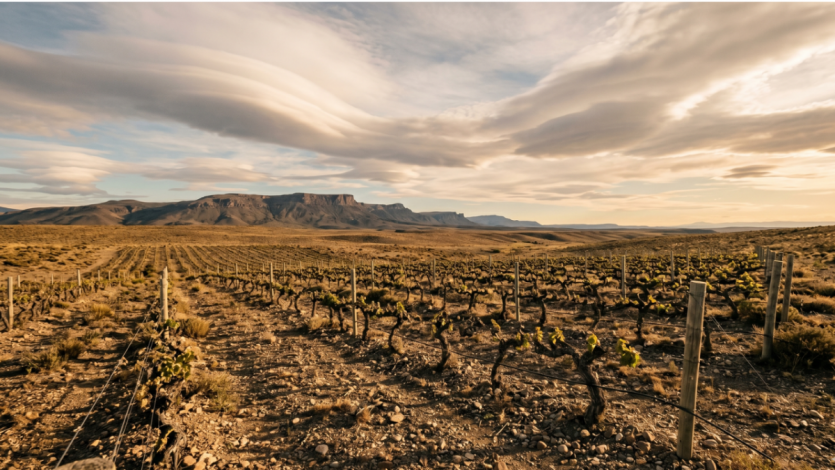
Pinot Noir is the flagship variety — Patagonia’s cool climate and ungrafted old vines produce a red-fruited, perfumed style with silky tannins and low alcohol that sets it apart from warmer-climate expressions. Malbec, Chardonnay and rare varieties like Trousseau complete a diverse portfolio.
Some of Río Negro’s most celebrated estates cultivate ungrafted vines from 1932 and 1955 — phylloxera never reached the region — using fully biodynamic methods. The resulting Pinot Noir is translucent ruby, with aromas of fresh raspberries, dried roses and earthy minerality. Patagonia holds 382 hectares of Pinot Noir, representing 19% of Argentina’s total plantings.
Patagonian Malbec offers a striking contrast to its Mendoza counterpart. Where Mendoza delivers ripe, plush fruit with higher alcohol, Patagonia produces a leaner, brighter version with fresh plum, violet and black pepper notes. In his Argentina 2025 Special Report, critic Tim Atkin MW awarded top Patagonian estates scores above 95 points, noting that Río Negro and Neuquén wines have improved considerably.
| Grape | Patagonian style | What to expect in your glass |
| Pinot Noir | Light-bodied, red-fruited, floral | Raspberry, cherry, dried rose, earthy finish |
| Malbec | Lean, fresh, mineral | Fresh plum, violet, black pepper, crisp acidity |
| Chardonnay | Citrus-driven, saline | Lime, green apple, mineral tension (Chablis-like) |
| Sauvignon Blanc | Herbaceous, taut | Cut grass, grapefruit, flinty acidity |
| Semillon (old vine) | Complex, age-worthy | Honey, beeswax, dried fruit, mineral backbone |
Cool-climate whites are another strength. Patagonian Chardonnay recalls Chablis with its citrus purity and saline finish, while Gewürztraminer from Chubut shows aromatic intensity few South American regions can match.
From the world’s southernmost vineyards in Argentine Patagonia to the curated Chilean wines poured as you navigate Fuegian channels, wine at the end of the world becomes a way of reading the landscape. Every glass aboard Australis connects the terroir of the south with the glaciers, wildlife and human stories that define this expedition. If you are ready to experience Patagonia with the comfort and cultural depth of over 30 years of expedition cruising, explore the Australis itineraries and find the route that speaks to you.
Frequently asked questions about Patagonian wines
Where is the southernmost vineyard in the world?
Bodega Otronia, in Sarmiento, Chubut (Argentina), at 45°33′ S — 50 hectares of organic vineyards owned by the Bulgheroni family.
Can you visit wineries in Patagonia before or after an Australis cruise?
Patagonian wineries can be visited, but it is important to consider that Patagonia is immense. From Ushuaia, reaching wine regions like Río Negro or Neuquén often requires domestic flights or very long drives — it is practically a journey in itself. This is a worthwhile option for travelers with enough time and a particular interest in Patagonian viticulture. For a more accessible wine experience, there are excellent vineyards within easy reach of Santiago in Chile and Mendoza in Argentina — both common stops on the way to or from an Australis expedition.
Is wine included on the Australis cruise?
Yes. Australis operates an all-inclusive open bar with mainly Chilean wines, complemented by select Argentine labels, plus spirits and cocktails. Wine is served at every meal.
What is the difference between Mendoza and Patagonian Malbec?
Patagonian Malbec is leaner, brighter and more acid-driven, while Mendoza Malbec is generally riper, fruitier and more full-bodied.
Are the wines served onboard from Patagonia?
The onboard selection features premium Chilean wines from Central Valley regions, complemented by Argentine Malbec from Mendoza — not Patagonian wines. They are carefully chosen wines enjoyed at the end of the world, a complementary experience to the Patagonian vineyards profiled above. Labels and vintages may change between seasons.


You may also like…


No comments yet
There are no comments on this post yet.
Leave a comment