
In 2026, the scientific community marks 190 years since the HMS Beagle returned to England, the expedition that transformed our understanding of life on Earth. But what many travelers don’t realize is that some of Darwin’s most formative observations were made long before the Galápagos, during his journey through the fjords, glaciers, and native settlements of Patagonia and Tierra del Fuego.

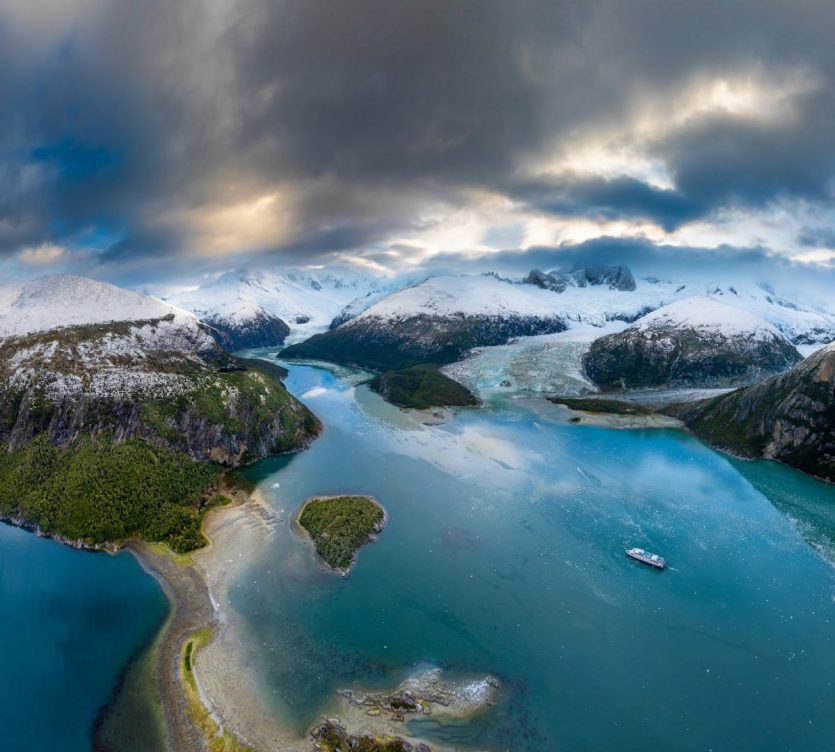
Today, Australis expedition cruises navigate these exact waters, stopping at the sites where Darwin collected specimens, documented geological formations, and encountered the Yaghan people at Wulaia Bay.
This article examines Darwin’s scientific legacy in the region, recent discoveries that continue to validate his work, and why the specific locations along Australis’ routes remain essential to understanding evolutionary science.
What did Darwin discover during his hidden journey through Patagonia?
While Darwin’s voyage is widely celebrated, his extensive observations in Patagonia remain one of the lesser-known chapters of scientific history. During the Beagle expedition, Darwin considered himself primarily a geologist, and it was the coasts of South America that tested and confirmed his understanding of Earth’s deep history.
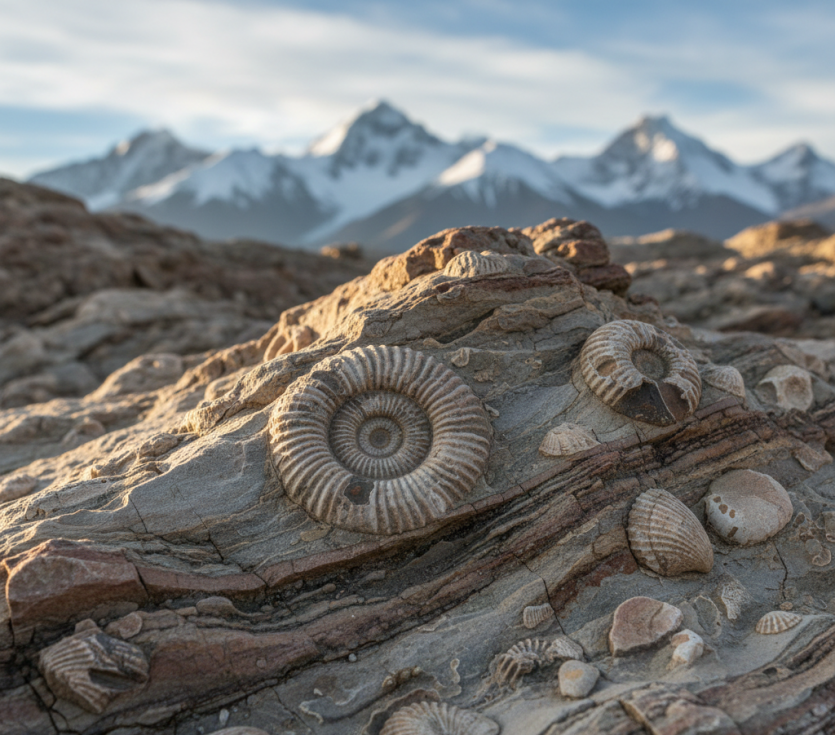
Darwin dedicated significant time to exploring Patagonia and Tierra del Fuego, where he made observations that would prove essential to his later theories. His key discoveries in the region included:
- Marine fossils at altitude: shells found hundreds of meters above sea level in the Andes, proving continental uplift
- Glacial erosion patterns: evidence that the fjords were carved over millions of years, not by sudden catastrophe
- Species distribution: the subtle differences between the common rhea and what would later be named Darwin’s rhea
- Geological layering: sedimentary evidence supporting gradual transformation over “deep time”
| Darwin’s Patagonian observations | Scientific significance | Where to observe today with Australis |
| Marine fossils in Andean foothills | Proof of continental uplift over millions of years | Excursions near Punta Arenas and the Strait of Magellan, where they were discovered |
| Glacier formations and “beryl blue” ice | Evidence of gradual erosion shaping the landscape | Pía Glacier the Avenue of Glaciers |
| Two distinct rhea species | Early evidence of speciation through geographical isolation | Patagonian steppe visible from various landing points |
| Yaghan survival adaptations | Human adaptation to extreme environments | Wulaia Bay information center and archaeological site |
This understanding of geological time proved essential to Darwin’s later evolutionary theory. If the Earth could transform so dramatically over millions of years, he reasoned, then living organisms could change as well. The fjords that Australis passengers navigate today are the same formations that convinced Darwin the planet was ancient beyond imagination.
The Avenue of Glaciers: Darwin’s laboratory of deep time
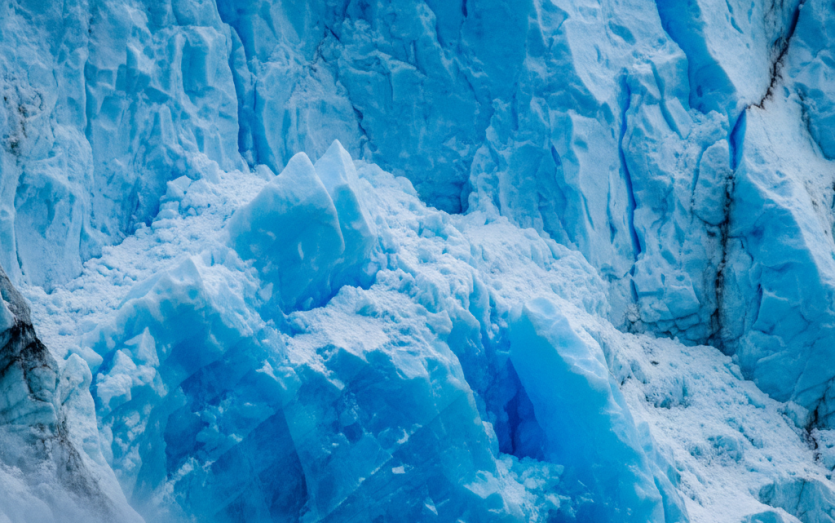
The glaciers Darwin observed between 1832 and 1834 remain active today along the route Australis vessels travel through the Alberto de Agostini National Park. Darwin’s influence in this region was so significant that the mountain range defining much of this landscape — and the very backdrop of these glaciers — bears his name: the Darwin Range. As a naturalist, he was among the first scientists to propose that glaciers were not static ice masses but powerful agents of erosion that carved the distinctive U-shaped valleys visible throughout Tierra del Fuego.
When Australis passengers disembark at the Pía Glacier or observe the different glaciers that come into view while navigating through the fjords, they witness the same processes Darwin documented. The distinctive blue color he described as “beryl” results from compressed ice that absorbs red light wavelengths—a phenomenon that continues to captivate visitors nearly two centuries after Darwin first recorded it. Learn more about highlights of visiting the historic Beagle Channel.
What are scientists discovering in Darwin’s waters today?
Patagonia remains a living laboratory. In 2024 and 2025, researchers made discoveries in the broader waters where Australis operates that would have fascinated Darwin, and that directly connect to questions he first raised during the Beagle voyage.
The 2024 hydrocoral discovery in the Strait of Magellan
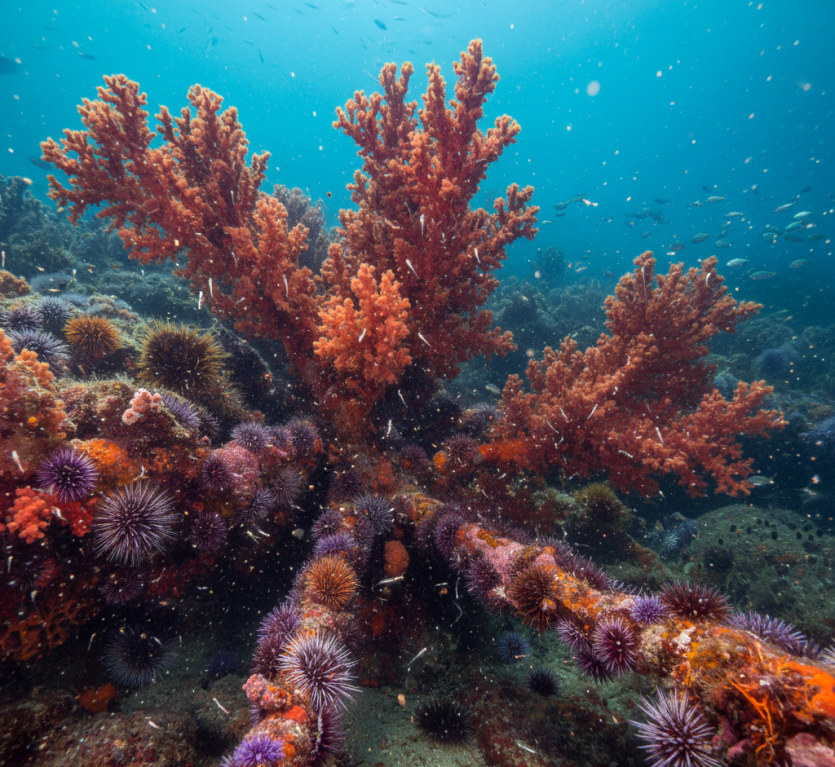
In June 2024, scientists from Rewilding Chile and the Spanish Institute of Oceanography discovered colonies of red hydrocorals (Errina antarctica) in the Kawésqar National Marine Reserve at unprecedented shallow depths, just one meter below the surface. These organisms typically inhabit waters 20 to 50 meters deep, making this finding exceptional.
Why this matters for Darwin’s legacy:
- Darwin developed his theory of coral reef formation during the Beagle voyage
- He proposed that atolls formed through gradual subsidence, the opposite process from the uplift he observed in the Andes
- These hydrocorals form “Marine Animal Forests” that serve as biodiversity hotspots, housing species from sea urchins to false king crabs
- The Strait of Magellan, which Australis crosses, continues to reveal biological secrets at the level Darwin only began to catalog
The 2025 Darwin’s rhea reintroduction
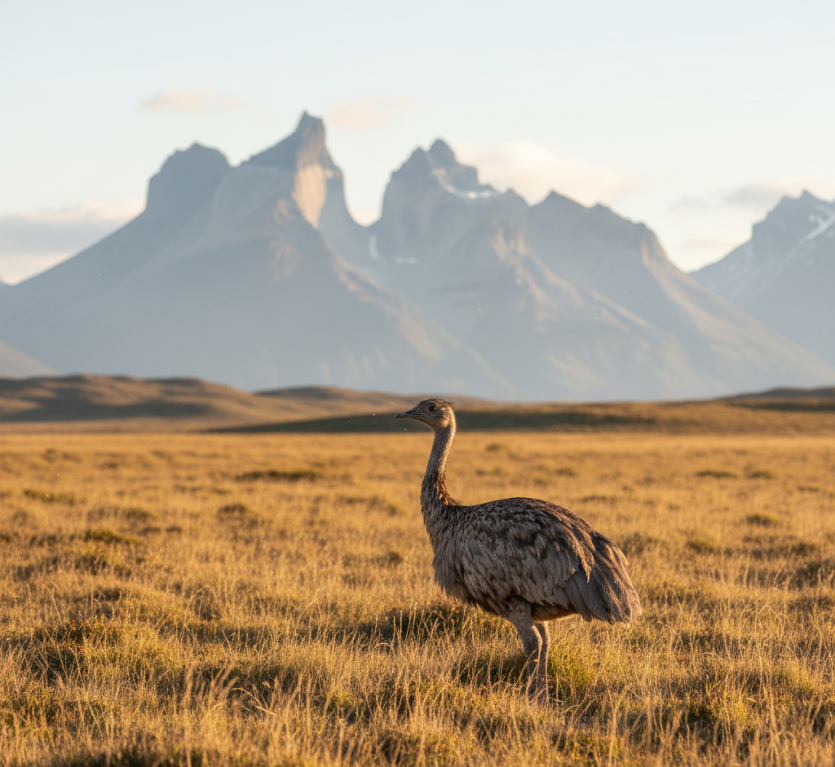
In March 2025, a historic rewilding project completed the first international Southern Cone collaboration to restore a wild bird population. Fifteen Darwin’s rheas (Rhea pennata) were translocated from Argentina to Chile’s Patagonia National Park.
Darwin himself first documented this species, noticing subtle differences between the common rhea and this smaller variant during horseback rides across the Argentine steppe, an early observation of speciation. The 2025 translocation validates Darwin’s biogeographical observations while demonstrating ongoing conservation commitment.
| Recent discovery | Location | Connection to Darwin’s work | Australis relevance |
| Red hydrocorals at 1-meter depth (2024) | Kawésqar Reserve, Strait of Magellan | Extends Darwin’s coral reef studies to Patagonian waters | Strait crossing on all itineraries |
| Darwin’s rhea translocation (2025) | Patagonia National Park | Validates species differentiation Darwin first observed | Near Australis navigation routes |
| Huemul deer subpopulation | Cape Froward | New population discovery near historic shipping routes | Near Australis navigation routes |
| GPS tracking of condors | Route of Parks | Modern evolution of Darwin’s field observation methods | Condors visible on multiple excursions |
These discoveries demonstrate that Patagonia remains an active biological research frontier, the same status it held when Darwin arrived.
What did Darwin learn from the Yaghan people at Wulaia Bay?
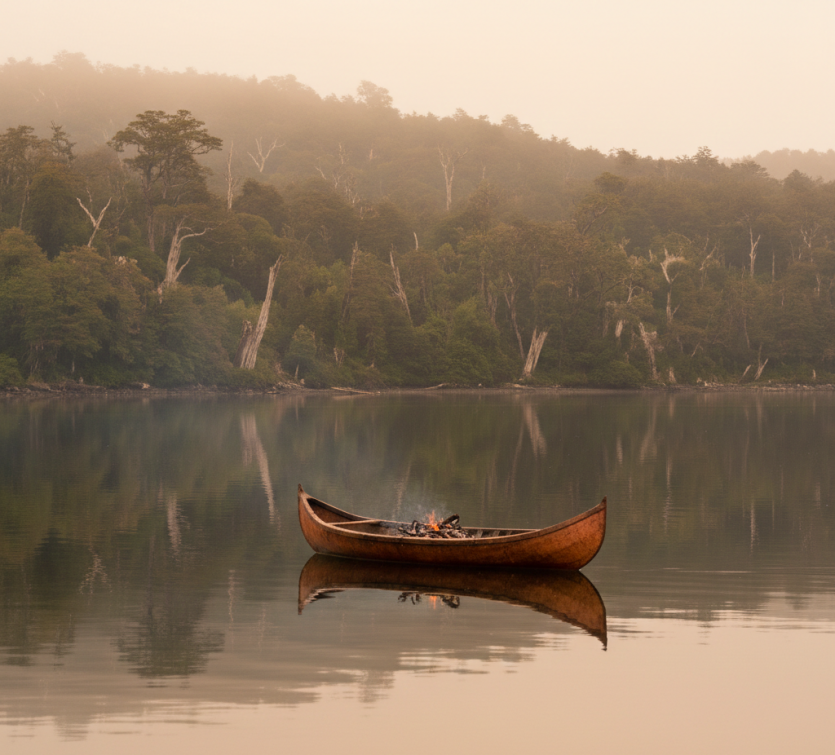
Darwin’s encounter with the Yaghan people at Wulaia Bay (now a scheduled Australis stop) represents one of the most complex chapters of the Beagle voyage. His observations challenged Victorian assumptions and contributed to his understanding of human adaptation.
The Yaghan had developed extraordinary survival strategies for the Fuegian climate:
- Fire transportation: carrying embers in canoes on beds of sand and seaweed, ensuring constant access to heat
- Metabolic adaptation: the ability to function with minimal clothing in temperatures that would incapacitate Europeans within hours
- Maritime expertise: canoe construction and navigation techniques refined over approximately 10,000 years of continuous habitation
- Resource management: sophisticated knowledge of seasonal marine food sources
Darwin was initially shocked by what he perceived as primitive conditions, using language that reflected Victorian prejudices. However, his observations also revealed genuine scientific curiosity about human adaptation to extreme environments. He recognized that the Yaghan had solved survival challenges that would have defeated European settlers.
Today, the Information Center at Wulaia Bay—supported by Australis—presents the Yaghan story from a contemporary perspective. Visitors can learn more about the sophisticated culture Darwin encountered, including replicas of traditional tools and canoes.
Why is 2026 significant for travelers interested in Darwin’s legacy?
The 190th anniversary of the Beagle’s return coincides with developments that make 2026 an optimal year to explore Darwin’s Patagonia.
The Museum of the Earth has announced Darwin Day 2026 will focus on mollusk evolution, directly relevant to Patagonia, where Darwin collected countless shells. Travelers in 2026 will find unusual alignment between global scientific programming and Australis destinations.
Darwin arrived in Patagonia as a 23-year-old with more questions than answers. He departed with observations that would reshape human understanding of life on Earth. The fjords, glaciers, and native sites he documented remain accessible—not as museums frozen in time, but as active landscapes where scientific discovery continues. For travelers seeking to understand how one voyage transformed modern science, explore our itineraries and navigate the waters that changed everything.
Frequently asked questions
What specific sites from Darwin’s voyage can I visit with Australis?
Australis routes include the Beagle Channel (named after Darwin’s ship), Wulaia Bay where Darwin encountered the Yaghan people, and the glaciers along the Avenue of Glaciers that he documented in his journals, set against the dramatic backdrop of the Darwin Range. The Strait of Magellan crossing follows the same passage the Beagle navigated in the 1830s.
How do Australis guides incorporate Darwin’s legacy into the experience?
Expedition guides provide context on Darwin’s observations at selected landing sites. The Wulaia Bay visit includes access to the Information Center featuring interpretive exhibits related to the area’s archaeological and cultural heritage. For more details, read about retracing Darwin’s route.
What wildlife that Darwin documented can passengers expect to see?
Darwin’s rhea, Magellanic penguins, sea lions, and Andean condors remain visible throughout Australis routes. Recent rewilding efforts have restored populations of species Darwin documented in his specimen collections. Learn more about Patagonia wildlife.


You may also like…


No comments yet
There are no comments on this post yet.
Leave a comment